In Pakistan, frizz can show up even on a “good hair” morning, one scarf, one dusty commute, one humid hour and the texture shifts. A frizz control hair serum in Pakistan is meant for that exact problem; smoothing the surface so hair doesn't puff up the second it meets friction or moisture. The trick isn't buying the strongest formula, it's learning placement, timing, and how little you actually need. Once that clicks, your styling products start working better too.
Why Serums Work Better Than “More Cream” on Frizz Days
Creams can soften, but frizz often keeps coming back because the surface stays rough. A serum sits lighter and acts like a finishing shield, less drag, less static, less “hair catching on hair.” That's why many people notice the biggest change not in shine, but in how the hair moves after it dries.
If you've been wondering does hair serum help frizz, the honest answer is yes. When frizz is coming from surface roughness and friction (not when the hair is soaking wet-dry from bleach and needs deeper repair first).
Start With the Main One: Argan Oil Serum
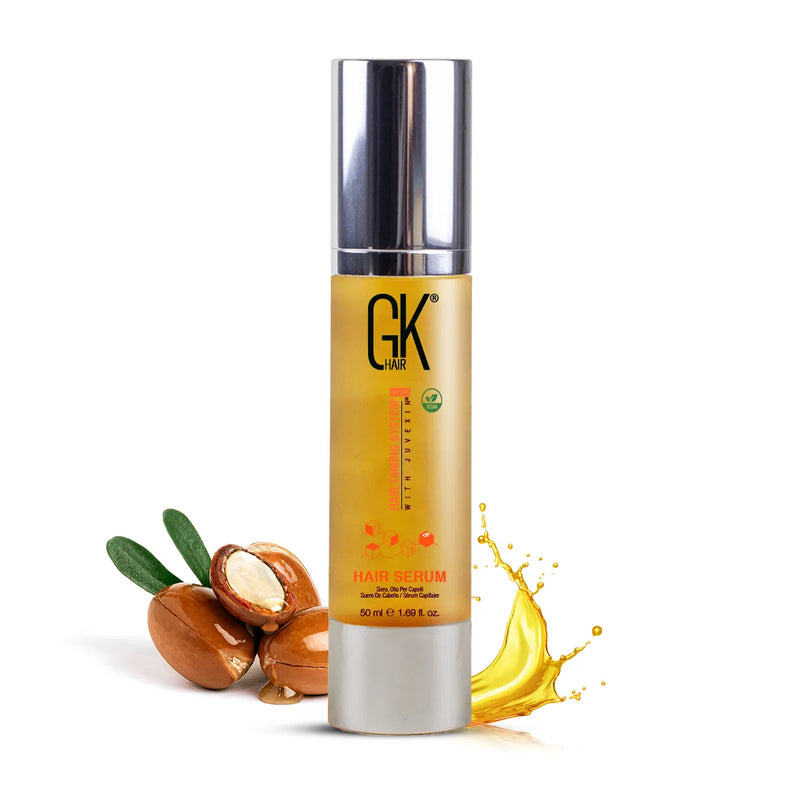
For most beginners, an argan-based serum is the easiest entry point because it smooths without needing a complicated routine. GK Hair Argan Oil Serum is positioned as lightweight andnon-greasy. It is meant to be used on damp or dry hair, from mid-lengths to ends (not the roots).

If you specifically want an argan oil frizz control hair serum, use it like this: warm a drop between palms, skim the outer layer first (that's where frizz shows), then touch the ends last. Two drops is usually where people accidentally turn “sleek” into “heavy.”
The Timing Trick Most People Miss
Serum isn't one moment, it's two.
-
On damp hair (after towel press): you're reducing friction as it dries.
-
On dry, cooled hair (after styling): you're sealing the finish so frizz doesn't rebound.
If you only use serum at the ends, you're trying to fix what has already formed. If you only use it on wet hair, the finish can still go fluffy later.
Cold air has a way of drying hair out quietly—until frizz is suddenly everywhere, which is why Winter Hair Care for Frizzy Hair: Keep Moisture Locked In is worth reading before the season does more damage than you expect.
What to Pair It With so It Doesn't Feel Like a Solo Act
A serum behaves differently depending on what you washed with and what you used before it.
-
If your hair frizzes because it's getting stripped or “tight” after washing, starting with GK Hair Moisturizing Shampoo & Conditioner makes the lengths feel more flexible before you even reach for styling.

-
If your hair gets oily at the roots but still frizzes through the ends, GK Hair Balancing Shampoo & Conditioner is the calmer base.
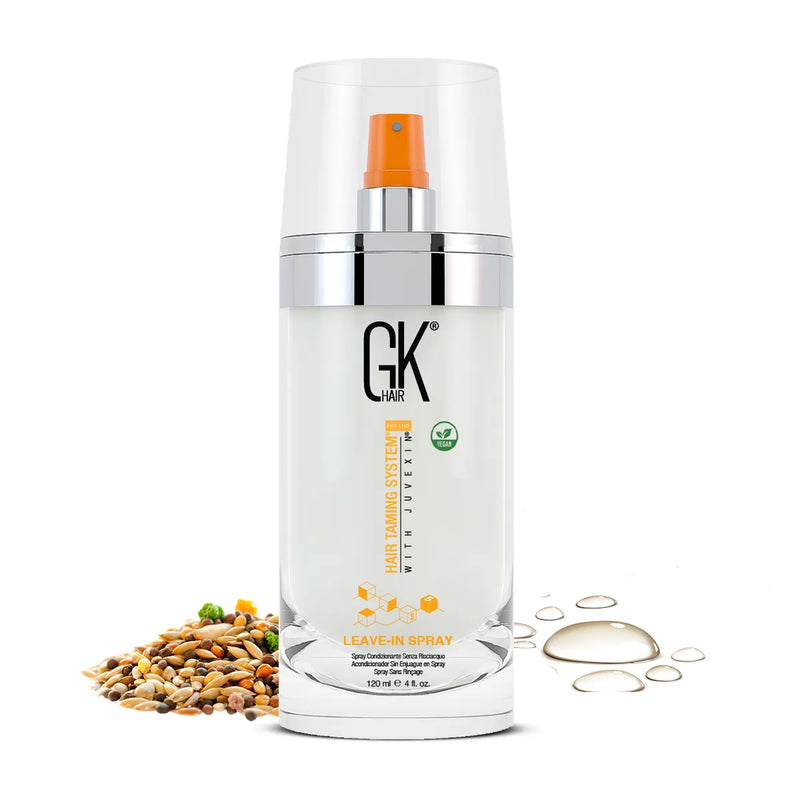
For damp-hair prep (the “slip” step), GK Hair Leave-In Hair Spray is designed to reduce frizz and flyaways, making hair easier to style.

Heat Days Need a Different Rule
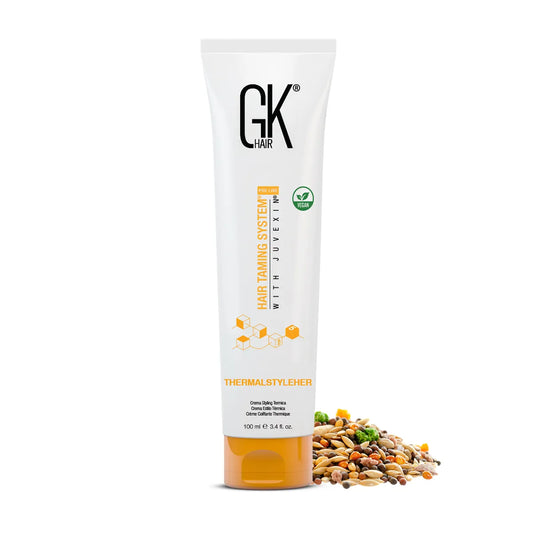
If you straighten or blow-dry often, don't make serum do a heat protectant's job. Serum can polish; it doesn't replace thermal protection. On heat days, add GK Hair ThermalStyleHer Cream before using heat styling tools, then use your serum after the hair cools. (That “cool down” part matters, hot hair + serum is where heaviness happens.)
This is also where your frizz control hair serum in Pakistan shows its value: fewer flyaways on the outer layer and less static under scarves later in the day.
Argan vs. Keratin-Style Serums
Some people lean toward a keratin frizz control hair serum when their hair feels rough after chemical treatments or frequent heat styling. It keeps the hair put together, especially through the lengths. Just keep expectations grounded, products that support structure work best when the hair is well-hydrated and handled gently. That combination is what actually makes frizz ease up, not protein alone.
If you like that “more supported” feel, pairing your serum with a Juvexin/protein-based leave-in step can help the finish feel less fluffy. GK's Leave-In Hair Spray is described as infused with Juvexin V2 and natural seed oils, which is why it often layers well under a serum.
Quick Fixes That Look Small but Change Everything
-
Don't put serum on roots “for frizz.” It almost always ends up as a flat, separated hair.
-
If you wear a hijab, apply serum to the outer layer and nape, those areas take the most friction.
-
Touch-ups should be a half-drop, not a full reapplication.
-
If hair feels sticky, you used too much or layered it over too much spray/cream.
Final Thoughts
A serum is one of the few steps that can calm the hair without adding extra time, when it's used as a finishing touch, not a treatment. Once you figure out the right amount and when to apply it, dry frizz becomes easier to prevent than to fix. And if sticking to a routine feels simpler when your basics already work well together, the GK Hair Holiday Shine Box aligns your wash, care, and finishing steps, making frizz control feel planned, not improvised!